Feed aggregator

Best Of Book Bits 2025: Part II

The Capital Spectator -

Here’s part II of our year-end review of Book Bits columns published in 2025, the counterpart to last week’s prelude. Happy reading!

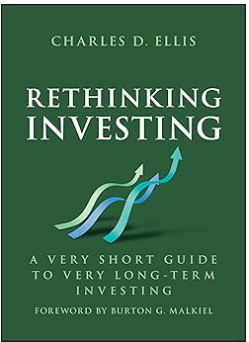
● Rethinking Investing: A Very Short Guide to Very Long-Term Investing
Charles D. Ellis
Summary via publisher (Wiley)
In just 10 short, accessible, and inviting chapters, Rethinking Investing: A Very Short Book on Very Long-Term Investing presents straightforward steps that ordinary people can take to better invest their money. This book dispels myths about the value of investment managers, highlights emotional tendencies that can cloud our financial judgment, explains why index funds are a savvy choice, and reveals secrets like why it’s better to wait until age 70 to receive Social Security benefits—along with the calculations that make this decision crystal-clear. Written by renowned investor and popular author Charley Ellis, this must-read resource shows you how to set yourself up for investment success.

● Our Dollar, Your Problem: An Insider’s View of Seven Turbulent Decades of Global Finance, and the Road Ahead
Kenneth Rogoff
Essay by author via The Economist
To paraphrase a common saying: it ain’t what you don’t know that kills you. It’s what you think you know that ain’t so. Nothing could better describe the numb-skulled thinking behind the havoc that President Donald Trump and his trade Rasputin, Peter Navarro, have wrought on the global economy. Among the likely casualties will be the supreme status of the dollar. Although the greenback will almost certainly remain the world’s dominant currency for at least a couple more decades, it will probably fall several notches. Expect the yuan and the euro to encroach on the dollar in the legal economy. Cryptocurrencies will do the same in the underground economy, which is roughly a fifth of global GDP. Reduced market share will mean higher interest rates on long-term dollar debt, and a weakening of the effectiveness of American financial sanctions, among other problems.

● The Behavioral Portfolio: Managing Portfolios and Investor Behavior in a Complex Economy
Phillip Toews
Summary via publisher (Harriman House)
The investment advisory industry is beset by two largely unacknowledged problems. First, the history and risks of both stock and bond portfolios far exceed what most investors and advisory practices can endure. Second, the approach that most advisors take to communicate about portfolios does virtually nothing to prevent investors from known biases and bad decision making. In The Behavioral Portfolio, Felipe Toews guides advisors build all season’s portfolios designed to both invest optimistically and address the real-world contingencies of investing in a high debt world. He begins by re-defining foundational portfolio objectives such such as gains with the market, low risk of extreme losses, and protection against high inflation. He then walks us through the process of quantifying and building these portfolios, illustrating that in so doing, advisors can improve probabilities of success.

● How Not To Invest: The ideas, numbers, and behaviors that destroy wealth – and how to avoid them
Barry Ritholtz
Interview with author via Prof G podcast
Barry Ritholtz, the co-founder, chairman, and chief investment officer of Ritholtz Wealth Management and the host of the Masters in Business podcast, joins Scott to discuss his new book, How Not to Invest: The Ideas, Numbers, and Behaviors that Destroy Wealth and How to Avoid Them. They unpack why diversification is both boring and sexy, whether the U.S. market is overvalued, and if the alternative investment industry is one of the biggest grifts in economic history.

● Capitalism and Its Critics: A History: From the Industrial Revolution to AI
John Cassidy
Review via The New York Times
Trump makes a few cameo appearances in John Cassidy’s new book, “Capitalism and Its Critics,” for his demonstrated ability to brag about his riches while tapping into growing discontent with the global capitalist system. Some of the critics Cassidy features in this book wanted to replace capitalism entirely; others, like Trump, have sought to preserve a core of self-interest while remaking capitalism’s rules. Rejecting a world financial order fueled by free trade and a bedrock American dollar, the president has been promoting a grab bag that includes both tariffs and crypto — a Trumpian hybrid of the very old and the very new.

Please note that the links to books above are affiliate links with Amazon.com and James Picerno (a.k.a. The Capital Spectator) earns money if you buy one of the titles listed. Also note that you will not pay extra for a book even though it generates revenue for The Capital Spectator. By purchasing books through this site, you provide support for The Capital Spectator’s free content. Thank you!

Market Premium For 10-Year Yield Holding Near 2-1/2 Year Low

The Capital Spectator -

The market premium for the 10-year Treasury yield continues to trade at a narrow gap over a “fair value” estimate, based on the average estimate for three models run by CapitalSpectator.com.

The updated estimate indicates that the 10-year yield traded roughly 18 basis points above fair value in November, based on analytics using monthly data. The current estimate is close to the lowest market premium since April 2023.

The slide marks the reversal of the previous surge in the market premium in recent years and highlights that valuation trends on this front remain cyclical. Although the duration of the cycle varies and, to some extent, is random, it’s clear that the ebb and flow of the premium and discount to fair value is a hardy perennial.

The previous peak was in October 2023, when the 10-year yield traded at a 1.37 percentage-point premium over the market rate. At the time, I wrote: “The spread is now at the 95th percentile, based on history since 1980. That implies that we’re near the peak.”

Echoing the historical record, the premium has faded recently. If the track record over the decades is a guide, there are non-zero odds that a negative premium will arrive at some point, although timing, as always, is uncertain.

Although short-term trading strategies based on the fair-value estimates aren’t recommended, the analytics can be used as the basis for tilting a bond portfolio one way or another for medium time horizons or longer. Generally speaking, when the fair value premium is relatively high (low), that implies that the 10-year yield will trend lower (higher).

Learn To Use R For Portfolio Analysis
Quantitative Investment Portfolio Analytics In R:
An Introduction To R For Modeling Portfolio Risk and Return

By James Picerno

Macro Briefing: 19 December 2025

The Capital Spectator -

US consumer inflation’s annual pace slowed more than expected in November, the Labor Department’s Bureau of Labor Statistics said. Headline CPI dipped to a 2.7% increase vs. the year-ago level while core CPI fell to 2.6%, a four-year low. Some analysts raised doubts about the numbers, citing the disruption in data collection due to the government shutdown. “The report wasn’t just noisy and full of gaps, it provided a downwardly biased perspective of inflation,” said Gregory Daco, chief economist at EY-Parthenon. “The downward bias stemmed from the carry-forward methodology that assumed an unchanged price index in October for all surveyed data – imparting a downward bias to inflation dynamics.”

US jobless claims fell last week, indicating that layoffs remain low, printing at a middling level vs. the range over the past year. Filings for new unemployment benefits dropped 13,000 to 224,000 for the week ending Dec. 13.

The US Leading Economic Index fell 0.3% in September, the Conference Board reports. The LEI fell by 2.1% over the six months between March and September 2025, a faster rate of decline than its 1.3% contraction over the previous six-month period (September 2024 to March 2025), and signaling weaker economic conditions ahead.

The Bank of Japan raised its short-term interest rate to a 30-year high. The central bank said rates are expected to remain “significantly negative,” adding that accommodative financial conditions will continue to firmly support economic activity.

The US 10-year Treasury yield fell after the government reported the consumer inflation cooled in November. The benchmark rate dropped to 4.12% on Thursday, the lowest close in nearly two weeks:

Foreign Bonds On Track To Outperform US Fixed Income In 2025

The Capital Spectator -

Echoing the strong run in foreign equities in 2025, bond markets ex-US are also having a good year. Using a set of ETFs to track the major international buckets of fixed-income securities shows across-the-board outperformance over a popular US benchmark through Wednesday’s close (Dec. 17).

The leading offshore performing sector this year: government bonds issued in emerging markets (without hedging foreign-currency risk) via the VanEck Emerging Markets Bonds ETF (EMLC), which is up 17.5% year to date. That’s more than twice the gain for the US benchmark: Vanguard Total Bond Market ETF (BND), which holds a mix of US government securities and investment-grade corporates.

Even the weakest foreign bond group – government bonds in developed markets ex-US – is posting a slight return premium over BND this year.

A key tailwind for gains in foreign bonds in 2025 from a US-based investor perspective is the weak dollar. The US Dollar Index, which tracks the value of the greenback relative to a basket of the world’s leading currencies beyond America, has slumped more than 9% year to date.

A factor behind the slide in the dollar: rate cuts by the Federal Reserve, which have reduced the relative allure of US bonds vs. foreign competition. All else equal, global investors favor higher yields and so the narrowing gap in US rates vs. offshore rates has probably redirected flows accordingly in some degree.

Fiscal concerns may be another factor persuading investors to raise holdings of foreign bonds, and thereby diversify away from US assets. Driving this trade: a large, persistent US budget deficits and record-high national debt has elevated uncertainty about the government’s financial management and long-term stability, if only in relative terms to recent history.

Political pressure on the Federal Reserve is another factor cited by some analysts. According to this line of thinking, the appearance of political interference by the White House raises questions about the degree of Fed’s independence and credibility to fight inflation.

Another factor favoring international diversification: Trade and economic uncertainty related to US tariffs. The reasoning here is that higher tariffs reduce the incentive to trade with America, which in turns lessens demand for dollars, if only the margins.

There are other factors that determine the dollar’s value in currency markets, of course, including a variety of agendas at central banks around the world. But one thing is clear: the dollar has weakened this year, and that’s been a bullish tailwind for foreign bonds.


Macro Briefing: 18 December 2025

The Capital Spectator -

Business inflation expectations in December remained steady at a 2.2% pace for the year-ahead outlook, according to the Atlanta Fed’s latest survey data. The current estimate is relatively middling for the range of results reported in 2025.

Federal Reserve governor Chris Waller said he anticipates cutting interest rates further next year to support a slowing labor market. “The labor market’s telling you we should continue cutting the rates,” Waller said during a conversation at the Yale University CEO Summit. “We’re not seeing a dramatic decline of the labor market going off a cliff, just kind of just continuing to soften and soften. So, we can go at a moderate pace.”

Winter heating costs expected to rise 9.2%, according to the National Energy Assistance Directors’ Association, a policy organization that represents state governments seeking federal funds for low-income home energy programs. The project rise is about three times the overall rate of inflation rate.

OpenAI is in discussions with Amazon about a potential investment and an agreement to use its artificial intelligence chips. The investment reportedly could exceed $10 billion.

Global coal demand is set to reach a record high for 2025 after the US recorded a rise. The IEA forecasts that global coal demand is now peaking and will fall 3% from current levels by 2030.

The rising gap in the 30-year Treasury yield over the Federal Reserve target rate highlights the market’s growing doubts about the central bank’s monetary policy, notes TMC Research, a unit of The Milwaukee Company. At issue is the lingering concern that inflation remains a risk factor for the Fed. The Fed counters that the recent weakness in the labor market is a more pressing concern, thus the decision to ease monetary policy.

Weak Payrolls Trend Highlights Emerging Risk For The Economy

The Capital Spectator -

The delayed payrolls reports finally arrived, but the news is mixed, at best. The Labor Department said that sharp swings in hiring unfolded in October and November. Looking through the monthly volatility suggests that hiring is slowing, slipping to a pace that’s raises a warning flag for the economic outlook in early 2026.

Let’s start with the monthly change in total nonfarm payrolls. The economy lost 105,000 jobs in October, primarily due to cuts in government directed by Department of Government Efficiency (DOGE). Hiring bounced back in November to a moderate 64,000 gain.

To minimize the monthly noise and the distorting effects from DOGE, it’s helpful to focus on private-sector payrolls for the year-over-trend. On that basis, the profile is worrisome. Hiring at companies slowed to a 0.8% increase in November vs. the year-earlier level.

The sluggish pace in November is associated with the early stages of recession in recent decades. For example, the annual change in private payrolls fell to 0.7% in December 2007, which marks the start of recession, according to NBER. One counter narrative is that the aging labor force and immigrant deportations have changed the calculus for what defines a weak labor market trend. Perhaps, but at some point, if the 1-year change keeps dipping, the negative effects for the economy writ large will reverberate.

Unemployment is still low by historical standards, but the jobless rate continues to push higher, suggesting that layoffs will continue to rise.

One reason for reserving judgment on the outlook for the labor market: weekly jobless claims remain low and, despite recent volatility, continue to hold in a range. A sustained rise in claims over the next several weeks, however, would confirm the warning in the sliding 1-year trend for private payrolls.

On the plus side, several business-cycle metrics still suggest that the economy is growing. The Dallas Fed’s Weekly Economic Index through Dec. 6, after sliding recently, has stabilized over the past several weeks, reflecting moderate growth.

Meanwhile, a strong tailwind was blowing in the third quarter via the Atlanta Fed’s latest nowcast (as of Dec. 16). The government’s delayed Q3 GDP data is scheduled for release next week (Dec. 23).

The fourth-quarter, however, looks set for a materially softer gain. An early hint arrived in yesterday’s PMI survey data. The Composite PMI, a GDP proxy, slipped to its weakest pace since June. “The flash PMI data for December suggest that the recent economic growth spurt is losing momentum,” said Chris Williamson, chief business economist at S&P Global Market Intelligence.”

Now-casting.com is estimating Q4 GDP growth at 2.1%. That’s a moderate pace, but far below the expected 3.5% increase via the Atlanta Fed’s current GDPNow estimate.

It’s too soon to confidently declare that a recession has started, but the risk has increased. Given various distortions affecting the economy, including tariffs, the recent government shutdown, and immigrant deportations, there’s still room for debate on the outlook for economic risk. But over the course of the next several weeks, as the data void from the shutdown fades, a clearer view will emerge.

How is recession risk evolving? Monitor the outlook with a subscription to:
The US Business Cycle Risk Report

Macro Briefing: 17 December 2025

The Capital Spectator -

US payrolls rebounded moderately in November after posting a sharp decline in October, the Labor Dept. reports. The October slide was largely due to federal government employees leave jobs after accepting buyouts from the Trump administration’s DOGE initiative. Meanwhile, the unemployment rose to 4.6%, a four-year high. “The US economy is in a hiring recession,” Heather Long, chief economist at the Navy Federal Credit Union, wrote on X.

US retail spending was unchanged in October, the Commerce Department reports. The flat spending followed a revised 0.1% increase in September. The results suggest that Americans have moderated their spending lately.

President Trump orders “total and complete blockade” of sanctioned oil tankers coming to and leaving from Venezuela. The announcement is seen as a move in ratcheting up pressure against leader Nicolás Maduro’s regime.

US business activity growth slowed in December, slipping to the weakest pace since June, according to PMI survey data, a GDP proxy. “The flash PMI data for December suggest that the recent economic growth spurt is losing momentum,” said Chris Williamson, chief business economist at S&P Global Market Intelligence.”

Risk-On Market Signals Persist Ahead Of US Economic Reports

The Capital Spectator -

The resumption of US economic reports continues this week with two key updates for November: payrolls report and consumer inflation. Analysts will be closely watching how markets react.

As of Monday’s close (Dec. 15), several big-picture indicators for evaluating sentiment continue to indicate a risk-on bias. Extending signaling from recent history, the trend remains positive for the ratio of two global asset allocation ETFs via an aggressive strategy (AOA) vs. its conservative counterpart (AOK).

Risk-on signaling also rolls on for the US equity market, based on the ratio for a conventional measure of the US stock market (SPY) vs. a low-volatility (USMV) counterpart, which proxies as a relatively conservative strategy for holding US shares. This indicator has surged this year, following the April selloff. As the end of the year comes into focus, this measure of the risk appetite continues to skew strongly positive.

A similar story applies to another dimension of investor sentiment for US stocks vis-à-vis the ratio of cyclical stocks (XLY) vs. defensive shares (XLP).

Meanwhile, the long-suffering run for small-cap stocks (IJR) vs. large caps (SPY) has been showing hints of reversing lately, but not enough to break the trend in favor of big-cap shares, at least not yet.

Ditto for the relative weakness for value risk factor (IWD) in the equities market vs. large-cap growth (IWF).

Meanwhile, relative strength in foreign stocks (VEA) vs. US shares (VTI) continues, but recent trading activity shows the trend has flatlined lately, raising questions about whether offshores equities will continue to outperform in 2026.


Macro Briefing: 16 December 2025

The Capital Spectator -

US homebuilder sentiment edged up in December, but continues to reflect negative sentiment about the market outlook. Builder confidence for newly built single-family homes is 39 this month, well below the neutral 50 mark. “The recent easing of monetary policy should help builder loan conditions at the start of 2026,” said NAHB Chief Economist Robert Dietz. “However, builders continue to face supply-side headwinds, as regulatory costs and material prices remain stubbornly high. Rising inventory also has increased competition for newly built homes.”

Fed Governor Stephen Miran says that “phantom inflation” is distorting the US central bank’s policy decisions, causing it to keep interest rates too high. “We must be thoughtful in considering genuine underlying inflationary pressures,” he argues. “Excess measured inflation is unreflective of current supply-demand dynamics.”

Nearly half of US states are facing high recession risk, or are already in recession, according to analysis from Moody’s. Meanwhile, 16 states, including Texas and Kentucky, are expanding.

The US has collected more $200 billion in tariffs this year from new duties imposed by President Trump since the beginning of 2025, according to Customs and Border Protection. The Supreme Court is set consider arguments that the new tariffs are illegal.

Ford Motor Company ends production of its all-electric F-150 Lightning electric pickup. The company said it will focus instead on hybrid vehicles and a future line of smaller, cheaper EVs.

The NY Fed Manufacturing Index fell back into negative terrain in December. The decline marks the end of several months of positive readings.

More people are using AI at work, according to a new Gallup poll. The percentage of U.S. employees who reported using AI at work at least a few times a year increased from 40% to 45% between the second and third quarters of 2025.

US Economic Updates This Week Will Help Clear The Data Fog

The Capital Spectator -

Lingering effects from the government shutdown continue to blur economic analysis, but two reports scheduled this week will provide markets with some much-needed clarity on how the fourth-quarter is unfolding.

November reports from the government for payrolls (Tues., Nov. 16) and consumer inflation (Thurs., Nov. 18) will be closely read and possibly dispense market-moving releases. In the best-case scenario, the numbers will show that hiring is stabilizing if not rebounding, while inflation, if not easing, isn’t trending up. Economists, however, are expecting results that support the recent narrative of a weakening labor market and inflation that’s ticking higher, moving further above the Fed’s 2% target.

The consensus forecast calls for hiring to slow sharply in November to +40,000, down from 119,000 in September, according to Econoday.com’s survey results. (The October payrolls release from the Labor Dept. is reportedly lost to the complications related to the government shutdown, although several private estimates indicate a loss in jobs at companies.)

Debate is simmering about whether slower hiring is related to a weaker economy, the effects from policy changes related to immigration, or both. “The aging population and restrictive immigration policy are weighing on labor supply,” says KPMG US senior economist Matt Nestler. “The result is a much lower break-even number of payrolls each month [the number needed to keep the unemployment rate unchanged]. Expect low payroll gains in the monthly jobs report,” he adds.

Whatever the reason, ADP’s chief economist, Nela Richardson, predicts that the labor market will remain weak for the near term. After her firm reported that the private sector cut jobs in November, she told Fortune last week:

“We’re tracking changes in real time—it’s as high-frequency as payroll data [can] get, and we have not seen this rosy picture for 2026 in the data [relative to Wall Street’s optimistic outlook]. I think [when people] point to an improved labor market next year, they’re highlighting a couple of things in the macro economy, while we’re looking at this very granular dataset of private employment.”

On Thursday, the government will publish consumer inflation data for November, which is expected to tick up to 3.1% year-on-year from 3.0% in September, according to Econoday.com.

The main concern is that a degree of stagflation weighs on the economy. “If the labor market continues to soften at the margin, inflation stays sticky, and affordability doesn’t improve, consumption might look less robust in 2026 compared with 2025,” advise analysts at the Schwab Center for Financial Research strategists.

The good news is that a solid tailwind was blowing in the third quarter, based on the Atlanta Fed’s latest nowcast (Dec. 11) for the upcoming Q3 GDP report scheduled for Dec. 23. Output is expected to rise at a strong 3.6% annualized pace, down slightly from Q2’s increase.

The analysis for Q4, by contrast, is relatively uncertain at best and, by some accounts, vulnerable to softer economic conditions.

Even if the incoming numbers are better than expected, the interruption of the government’s data collection during the shutdown will continue to muddy the waters.

“It may take until December data is released in January to feel confident regarding whether inflation is cooling toward target or stuck at elevated levels,” says Andrew Hollenhorst, chief economist at Citi.

How is recession risk evolving? Monitor the outlook with a subscription to:
The US Business Cycle Risk Report

Macro Briefing: 15 December 2025

The Capital Spectator -

US 30-year Treasury yield starts the trading week at its highest level in more than three months. The long-bond rate, the most inflation-sensitive maturity, closed up on Friday at 4.84%, the highest since early September.

Two delayed US economic reports scheduled this week will provide more context on macro conditions. November updates are set for payrolls (Tues., Dec. 16) and inflation (Thurs., Dec. 18), offering an enhanced review on the economic trend following a government shutdow that postponed regular data releases.

White House economic adviser Kevin Hassett, the front-runner to be the Federal Reserve’s next chair, said there is “plenty of room” to cut interest rates further. He noted that he could change his mind if inflation rises.

China’s economic slowdown deepened in November as consumption, investment and industrial output growth fell short of expectations. “The contraction of fixed asset investment and the drop in property prices in recent months have been transmitted to the consumer sentiment,” Zhiwei Zhang, president and chief economist at Pinpoint asset management, said in a note.

Pages